Blog
What is an EV Charge Card?
As electric vehicles become more common across the UK and Europe, organisations are looking for reliable ways to manage charging access. While drivers increasingly use apps or contactless payments, businesses handling multiple vehicles often need something more stable and trackable. This is where an EV charge card comes in.
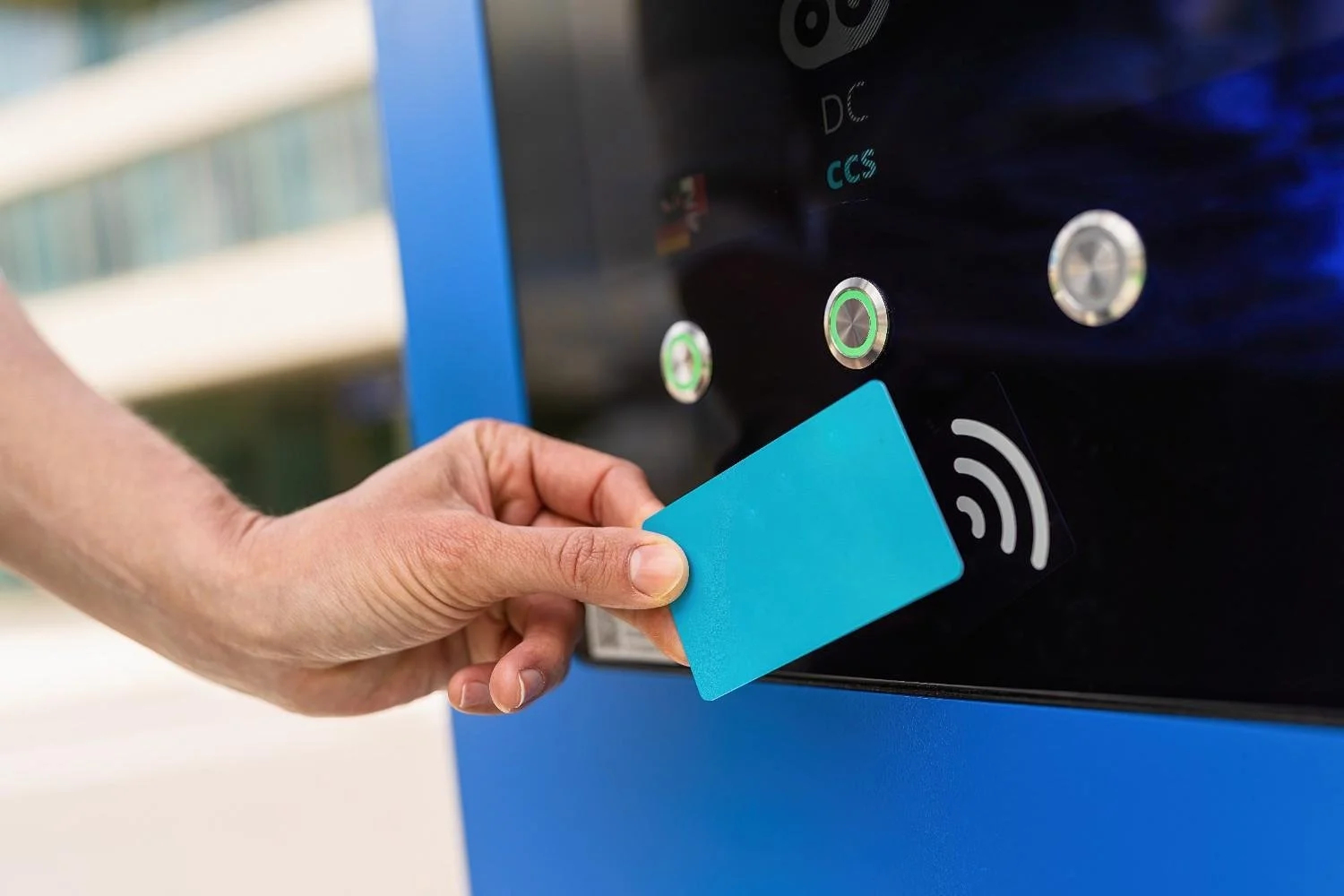
An EV charge card (sometimes known as a charging card, electric car charging card, electric fuel card, or EV fuel card) is a contactless RFID credential that allows authorised users to start a charging session at compatible charge points. When tapped against a reader, the card communicates with the network to authenticate the user, begin charging and log the session for reporting and billing. An electric car charging card is particularly helpful when managing drivers across multiple sites, locations, or networks where mobile signal can be unreliable.
How EV charge cards work
EV charge cards are powered by RFID technology, using high-frequency communication to securely identify the cardholder. When the card is tapped, the chip sends a unique ID to the charge point. The station checks the credentials and, if valid, activates the charger. When the session finishes, the electric vehicle charge card can be tapped again to end charging.
This frictionless process gives drivers access without relying on apps or bank cards. It also helps operators keep charging consistent across older and newer hardware. Different networks use slightly different terms, including EV charge card, electric car charge card, card for charging electric cars, and charging card for electric car use. All describe the same underlying function: fast, contactless authentication at charging points.
Why businesses use EV charge cards
Businesses benefit from more than just simple access. EV charge cards allow consistent tracking across fleets by assigning charging sessions to a specific driver or vehicle. Billable data can be pulled into one account, helping organisations manage usage, energy costs, and reimbursement.
For companies with many vehicles or multiple sites, this centralised approach removes complexity. It also supports secure fleet identification without storing payment details on individual drivers’ devices. For organisations working with rental vehicles, logistics, or mobility platforms, EV charging cards are an important tool for scaling electric operations.
EV charging cards UK
In the UK, the electric car charging network is growing rapidly, with both public and workplace charging becoming more widely available. Many enterprise users still rely on EV charging cards UK-wide to ensure dependable access, especially when travelling across areas with mixed charging infrastructure.
Although newer rapid chargers commonly accept bank cards, electric car charging cards still have a role where contactless payments are unavailable or network apps are unreliable. For this reason, many businesses choose to provide both a charge card for electric cars and an app-based option, giving drivers greater flexibility.
Explore our EV charge cards for more detail on chipsets, materials, and project options.
Sustainability and EV charge cards
Traditional EV charge cards are made from layered PVC and metals. As organisations move toward net-zero goals, sustainability is becoming an important consideration.
At Oomph we have developed Pulper Zero®, a recyclable inlay that removes plastic and metal from the card structure. This makes it possible to create electric car charging cards that can be processed through fibre recycling streams. These paper-based card structures help businesses reduce waste while maintaining performance.
Pulper Zero® is available in multiple formats including cards, tags and labels.
Choosing the right electric car charging card
EV charging cards can support a variety of chipsets depending on security and compatibility requirements. Oomph works with HF credentials most commonly used in EV access solutions. This ensures compatibility across a wide range of networks and platforms. Some programmes use UHF options for long-range vehicle identification, especially in fleet or depot environments.
If you are unsure which electric vehicle charge card technology is right for your application, our team can help specify the correct chip and format. Visit our RFID cards page for more detail.
EV charge formats
Most organisations choose a standard card format, but EV charge cards can be supplied as:
• EV RFID card
• Compact fob or tag
• Vehicle hang tag for windshields
Card form remains the most popular because it is durable, easy to carry and custom brand-able.
Future authentication
The EV charging space is evolving. Plug-and-charge systems, where the vehicle authenticates automatically, are expected to increase over the next few years. For now, a mix of methods is still required. Cards remain reliable, universal and easy to deploy.
Final thoughts
EV charge cards remain a practical way for organisations to manage electric vehicle charging at scale. They offer consistency across sites, help standardise billing and provide reliable access where apps or contactless payments may be unavailable. With sustainable options now emerging, including Pulper Zero®, EV charge cards can support both operational and environmental goals.
To explore custom EV charge cards for your fleet or platform, contact our team or visit our EV charge cards page.