Blog
What is a Digital Product Passport
A digital product passport, often shortened to DPP, is a structured record of information linked to a physical product. It provides insight into where the product came from, what it’s made of, and how it can be repaired, reused, or recycled. Rather than relying on printed documentation or disconnected databases, a digital product passport keeps product information accessible throughout its lifecycle. European regulation is driving rapid adoption, especially under the EU’s upcoming circular-economy framework. Many organisations are now exploring how to build DPPs into future supply chains.
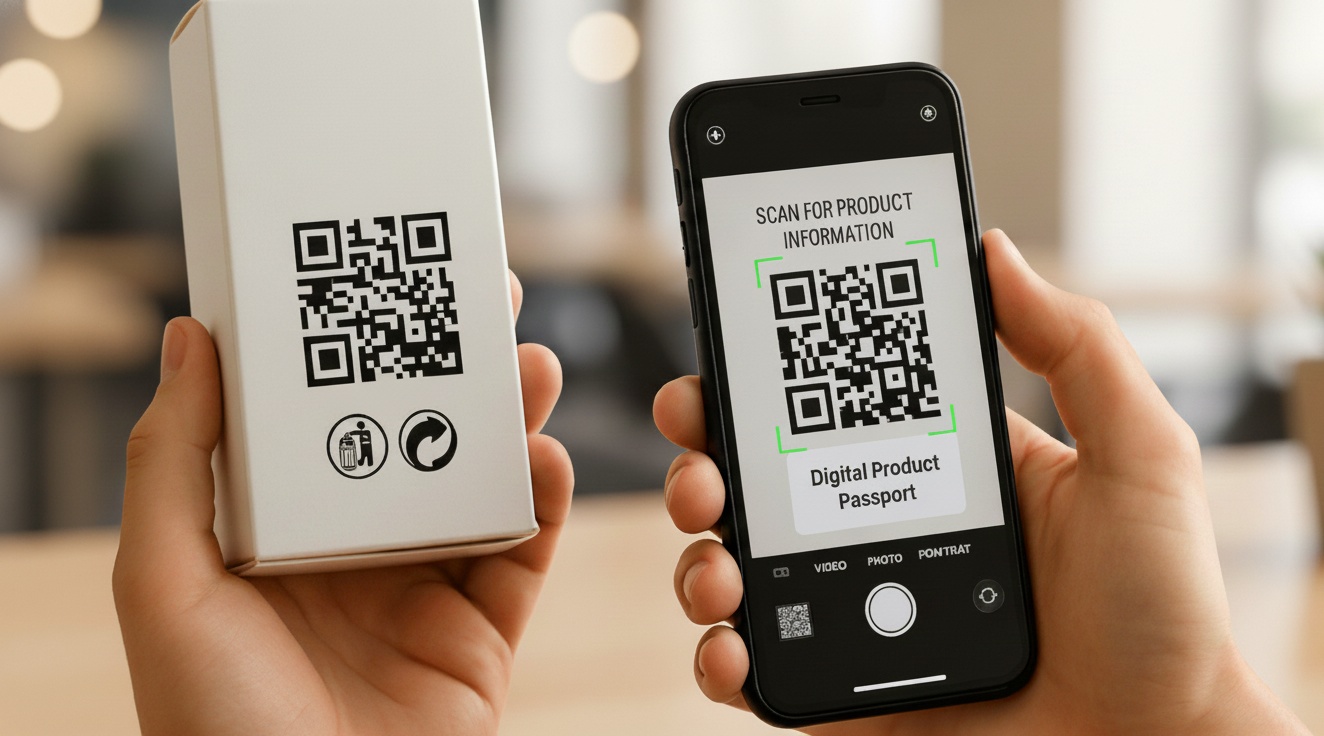
At its core, the concept is simple. A product is issued with a digital record that can be accessed via RFID, NFC or QR code. The passport then follows the product from creation to end-of-life, making it easier for manufacturers, retailers, regulators and end users to understand how to manage it responsibly. Learn more about our RFID technology here.
Why digital product passports matter
A growing number of industries are being asked to provide more detailed information about their products. This includes materials, sourcing, energy used in production, and how the product should be handled after use.
Digital product passports make this traceability practical. For example, when a product reaches the recycling stage, the facility can instantly see what materials were used and how to process it. When a device is serviced, technicians can check component history or replacement compatibility. Businesses gain transparency, reducing the risk of waste and improving sustainability reporting. This visibility strengthens customer confidence too. When people understand a product’s origin and environmental impact, they can make more informed decisions.
How digital product passports work
The structure of a digital product passport is designed to follow the lifecycle of a product. It usually contains three core elements: a unique identifier, a digital record, and a data carrier.
A unique identifier links the product to its digital record. The digital record stores structured information such as material composition, sourcing, repair guidance, and recycling instructions. The data carrier sits on the product itself. This may be RFID, NFC, a QR code, or a combination, depending on how the product will be accessed.
RFID and NFC are becoming preferred in enterprise environments because they enable automation, fast scanning at scale, and reliable read performance, even as products move through busy supply chains. Oomph supports digital product passport programmes through RFID and NFC-enabled cards, labels and inlays, including Pulper Zero®, a plastic-free, recyclable option. Explore Pulper Zero here.
Benefits you can expect
Introducing digital product passports provides several practical advantages for enterprise organisations. With structured, product-level information available throughout a lifecycle, teams gain greater visibility into how items are made, used, serviced and retired. This helps businesses repair or reuse equipment rather than replace it, supporting more circular practices.
Compliance becomes easier too. DPPs help demonstrate responsible sourcing, material composition and correct end-of-life handling. As sustainability requirements continue to increase across Europe, this level of transparency will only grow in importance.
Digital product passports also encourage trust. When manufacturers provide clear detail about provenance and environmental performance, buyers, regulators and partners gain confidence. At the same time, the increased flow of lifecycle data supports better planning and analysis, helping organisations understand warranty patterns, improve stock management, and streamline service operations. In time, this contributes to lower waste, reduced operational cost, and more resilient supply chains.
How to prepare as a business
Getting ready for digital product passports begins with mapping the product lifecycle. This means reviewing how products are designed, manufactured, transported, serviced and ultimately recycled. Understanding where data is created, and who needs access to it, highlights opportunities to reshape systems and processes.
Once mapped, the next step is to establish how the information will be linked to the physical product. RFID and NFC are strong options because they allow automatic scanning within supply chains while also supporting simple customer interactions. Choosing a suitable data carrier is an important stage in building a workable long-term system.
Infrastructure is also key. Businesses need a reliable way to capture, store and distribute the data associated with the passport. This often means integrating existing systems, developing new data flows, or working with specialist partners. Material selection should be considered too. For RFID and NFC applications, recycled or paper-based substrates can help meet wider sustainability goals.
Finally, digital product passports should be thought of as part of a broader product ecosystem, not a standalone initiative. Connecting them to existing RFID programmes, packaging, labels or asset-management tools helps embed them into daily operations, making adoption smoother and more scalable.
Digital product passports and sustainability
One of the biggest drivers behind DPPs is the shift to a circular economy. By making material content and repair instructions easy to access, a product becomes easier to recover, reuse or recycle.
For RFID-enabled DPPs, material selection matters. Oomph offers Pulper Zero®, a paper-based, high-performance RFID inlay designed to support recycling streams without plastic or metal layers. For organisations looking to meet sustainability targets, this provides a lower-impact alternative to traditional RFID products made from PVC and aluminium.
Pulper Zero is available in cards, tags and labels, allowing a flexible approach across industries including retail, logistics, healthcare and mobility.
Where digital product passports are being used
Digital product passports are being explored across multiple industries including fashion, electronics, automotive, industrial equipment and consumer packaged goods. They are expected to become mandatory across several EU sectors over the coming years.
Some organisations are beginning to combine RFID and NFC with DPPs to create hybrid systems. These allow the same product to be tracked across supply chains using RFID while also enabling customer engagement through NFC interaction.
This opens opportunities for brands to provide repair instructions, provenance data, authenticity checks and recycling guidance directly to end users, helping products remain in use for longer.
Final thoughts
Digital product passports are set to change how products are managed, from sourcing to disposal. They give organisations the opportunity to design smarter, reduce waste and improve transparency. For many, RFID and NFC will be the most practical way to connect physical products with their digital identity.
If you’re exploring how to introduce digital product passports into your product or supply chain, speak with our team. We can help specify the right RFID or NFC format and recommend sustainable materials, including Pulper Zero®, for your application.